
You've searched "how much does a website cost" and gotten answers ranging from $0 (Wix free tier) to $250,000+ (enterprise agency). Neither number is useful if you're a small business owner trying to make an informed decision.
Here's the honest breakdown based on what we charge and what we've seen across the industry.
The Short Answer
A custom-built website from a solo developer or small studio typically falls into four ranges:
Simple marketing site (5 pages): $1,500–$2,500. You get a responsive website with a contact form, basic SEO, and mobile-first design. This is what most new small businesses need. Timeline: 2–3 weeks.
Business site with lead capture: $4,000–$7,500. Everything above plus online booking, a CMS so you can update content yourself, photo galleries, and conversion-optimized landing pages. Timeline: 4–6 weeks.
Custom operations platform: $9,500–$18,000. This is where you get a CRM, scheduling system, payment processing, email automation, admin dashboard, and role-based access. This replaces multiple SaaS subscriptions with one system built for your workflow. Timeline: 8–16 weeks.
Enterprise / complex builds: $20,000+. E-commerce, multi-location, custom integrations, API work. Scoped per project.
What Drives the Cost
Three things determine where your project lands within those ranges:
Complexity of business logic. A restaurant website with a menu and contact form is straightforward. A field-service company that needs crew scheduling, customer management, and automated invoicing involves more engineering. The code for a booking system that prevents double-bookings and processes deposits is fundamentally different from a static page.
Number of integrations. Every third-party connection (Stripe for payments, Resend for email, Google Maps for locations) adds development time. Each one needs to be set up, tested, and handled gracefully when the third-party service has issues.
Content volume. A 5-page site and a 50-page site with a blog, species library, and service area pages are different projects. More content means more templates, more SEO work, and more testing.
The Hidden Cost: Monthly Maintenance
The build price is only half the picture. Every website needs hosting, SSL certificates, security patches, and dependency updates. If you want someone handling that for you, expect $149–$549/month depending on how much active development you need.
Here's what those tiers typically include:
$149/month (Essential): Hosting, SSL, uptime monitoring, security patches, 1 hour of support.
$299/month (Standard): All of the above plus dependency updates, bug fixes, and minor content changes. About 3 hours of work per month.
$549/month (Growth): Active development: new features, SEO pages, email campaigns, analytics and reporting. About 8 hours per month.
How We Compare to the Alternatives
vs. Agencies ($25K–$75K): You're paying for project managers, account executives, and office space. The actual developer writing your code might be a junior engineer. With a solo developer, you get senior-level work at 30–50% less because there's no overhead.
vs. WordPress freelancers ($8K–$20K): WordPress sites depend on plugins for functionality. Every plugin is a potential security vulnerability and a point of failure on updates. Custom code means no plugin bloat and no surprises.
vs. Wix/Squarespace ($0 + $35/mo): Fine for a hobby project. But when you need custom logic (real booking systems, payment processing, CRM) you'll hit the wall. And you'll have spent months learning the platform's limitations.
vs. Offshore freelancers ($3K–$10K): Timezone gaps make communication painful. Quality is inconsistent. And when something breaks at 3 PM your time, your developer is asleep.
What to Ask Any Developer
Before you sign anything, ask these questions:
"Do I own the code?" If the answer is anything other than "yes, completely," walk away.
"What happens if we stop working together?" You should be able to take your code, your data, and your domain and move to any hosting provider.
"Who will I be talking to?" If it's not the person writing your code, you're paying for a middleman.
"Can I see something you've built, live, not a mockup?" Screenshots can be faked. A live demo can't.
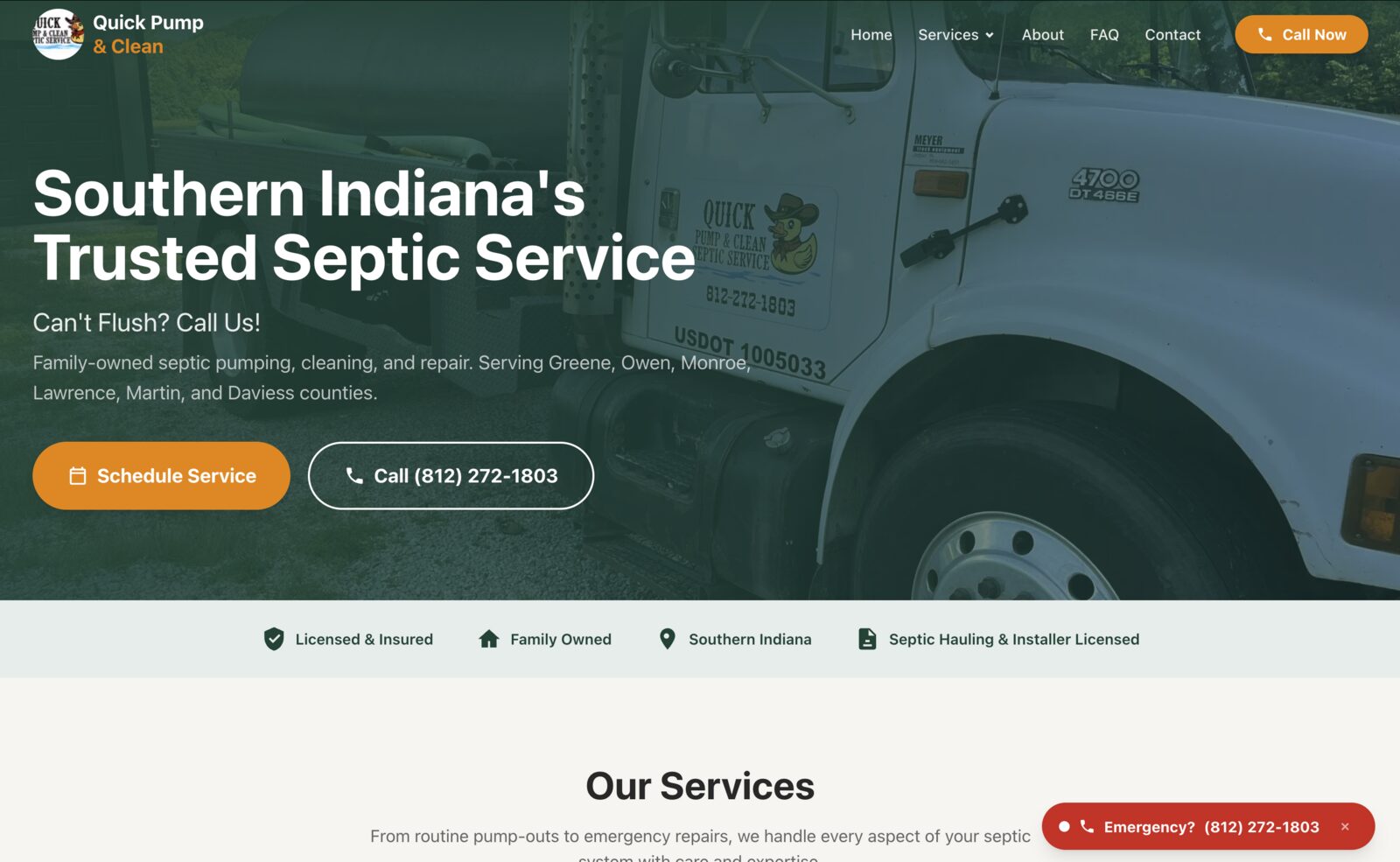
Want to see one live?
Every platform we build ships with a real, clickable demo, not screenshots. If a developer can't show you working software, that tells you something. Ask for the link.
The Bottom Line
Custom development costs more upfront than a template. But you get code built for your business, you own it completely, and you're not paying monthly rent to a platform that controls your data. For most growing businesses, the math works out in your favor within the first year.